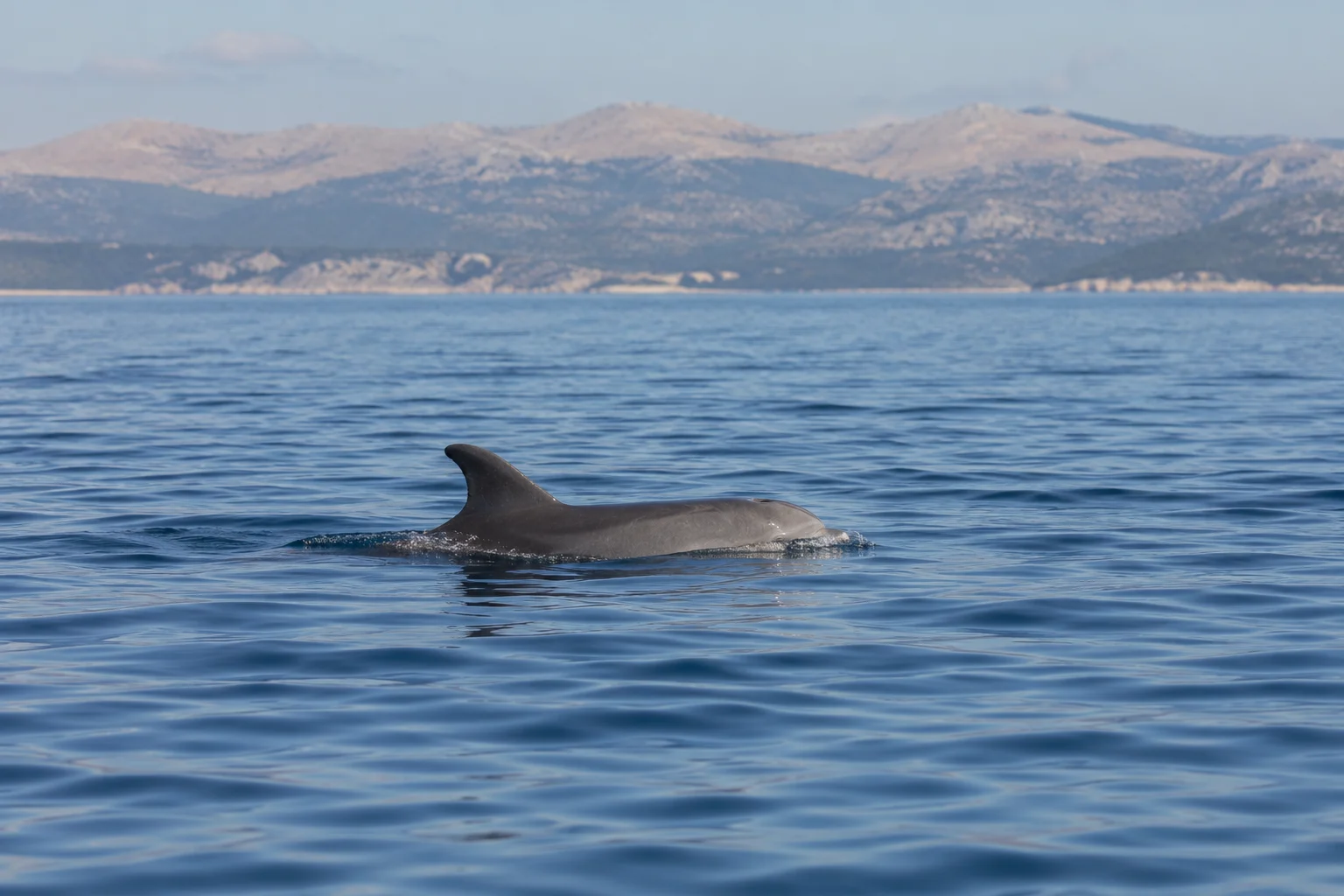
Two injured bottlenose dolphins were mistaken for one another in Novigradsko more. Blue World has identified Košara as well as Oliver. The institute describes their presence in the same area as coincidental—and continues to ask people to keep their distance.
Why people suddenly spoke of two Olivers
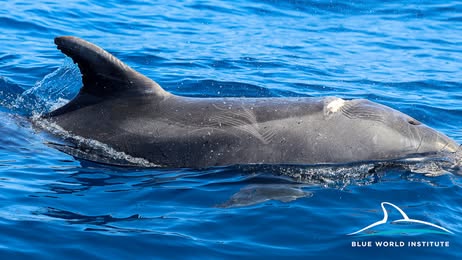
Several reports from Novigradsko more described dolphins with damaged tail flukes. These do not represent two sightings of the same familiar solitary animal: in its statement of 9 October, the Blue World Institute explains that it recognised Košara as well as Oliver. A video recorded by Igor Goić helped with identification.
The experts' key statement puts a brake on the tempting feel-good story: the two animals' current use of the same area is coincidental. The statement confirms neither friendship nor lasting companionship. We therefore report the identification of two individuals, not a new dolphin partnership.
This distinction also changes the value of a sighting report. A conspicuous injury alone does not establish a name. Photographs and videos can help experts distinguish animals. For observers, describing features and leaving identification open is more honest than passing a guess on as certainty.
Košara's history goes back to 2010
Blue World documented Košara in 2010 with fishing line wrapped around various parts of his body. A detailed institute report from 2019 describes deep injuries and the loss of parts of his fins. His health was monitored over several years through further observations.
In 2015, researchers found that part of the line had disappeared. Later observations showed Košara with other dolphins again and also farther from fish farms, near which he had previously sought food. The historical report thus describes development over years, not a suddenly successful rescue in October 2026.
The current statement cites Košara as an example of a dolphin surviving for a long time despite severe lasting injuries. It is not, however, a medical prognosis for Oliver. Two animals can have similar visible damage yet differ in health, behaviour and life history.
Why the warning about Oliver still applies
The institute published separate behavioural advice for Oliver on 31 July. It advises against swimming with or deliberately making contact with the animal. Blue World describes him as a solitary dolphin whose proximity to people creates additional risks for both sides.
The advice remains clear: do not touch, feed or enter the water with the dolphin. Anyone encountering him should give him space and withdraw. A kayak, SUP or boat is no reason to chase him or repeatedly cut across his path either. If he approaches a motorboat himself, the institute recommends putting the engine in neutral and letting him move on.
An apparently friendly impression from a human perspective is no promise of safety. News of a second animal should therefore certainly not prompt a search for the closest possible photographs. The aim is not to bring the two together for a shared picture or offer Oliver human company.
A useful report needs observation, not pursuit
Blue World requests sighting reports and mentions Marine Ranger in the current post. Alternatively, a reporting form is available on the institute's website. It asks for details including location, date, time, number of animals and distinctive features. An existing photograph or short video can help with assessment.
Keep observation and interpretation separate. 'Two animals some distance away' is different from 'the two are playing together'. Instead, record what you actually saw: direction of movement, a visible fin, approximate duration or a distinctive scar. If you are unsure, that uncertainty belongs in the report too.
The data are intended for research and conservation, not as instructions for the next encounter. Do not publish an invitation to seek out a dolphin at a supposedly reliable location. A report to experts can be valuable even if the picture is unremarkable and the animals subsequently disappear from view.
Do not attempt a rescue yourself when you see injuries
The Košara report expressly highlights the risks of unprofessional disentanglement attempts: remaining line or net fragments can cause further injury, and direct contact can endanger people too. A visible injury is therefore not an instruction to jump into the water or pull at the animal.
For a dolphin that is actively entangled or appears to need help, inform Blue World at +385 51 604 666 or info@blue-world.org; for an acute emergency, the institute also names 112 for coordination. Describe the situation and follow the experts' instructions. For an ordinary sighting without an emergency, the reporting channel is sufficient.
The new report is therefore both hopeful and sober: a long-known animal has been recognised again. The most important help for both dolphins remains allowing them their own habitat and their own choices.
Faktagrunnlag
Kilder og dato
Kildene underbygger fakta. Planleggingsråd og anbefalinger er Golden Beachs redaksjonelle vurderinger.
- Statement on identifying Oliver and Košara in Novigradsko moreBlue World Institute · Official Facebook post · 9 October 2026; complete public post read directly on 10 OctoberCurrent identification using Igor Goić's video, coincidental use of the area, Marine Ranger and image permission with full credit and unaltered logo
- New video of injured dolphin KošaraBlue World Institute · 23 June 2019 · Historical backgroundDocumented injury history since 2010, later observations and warning against unauthorised disentanglement attempts
- Do not swim with OliverBlue World Institute · 31 July 2026Behavioural advice concerning Oliver; no evidence of a current friendship
- Report a SightingBlue World Institute · Accessed on 10 October 2026Reporting form, useful details, photographic/video evidence and contact