

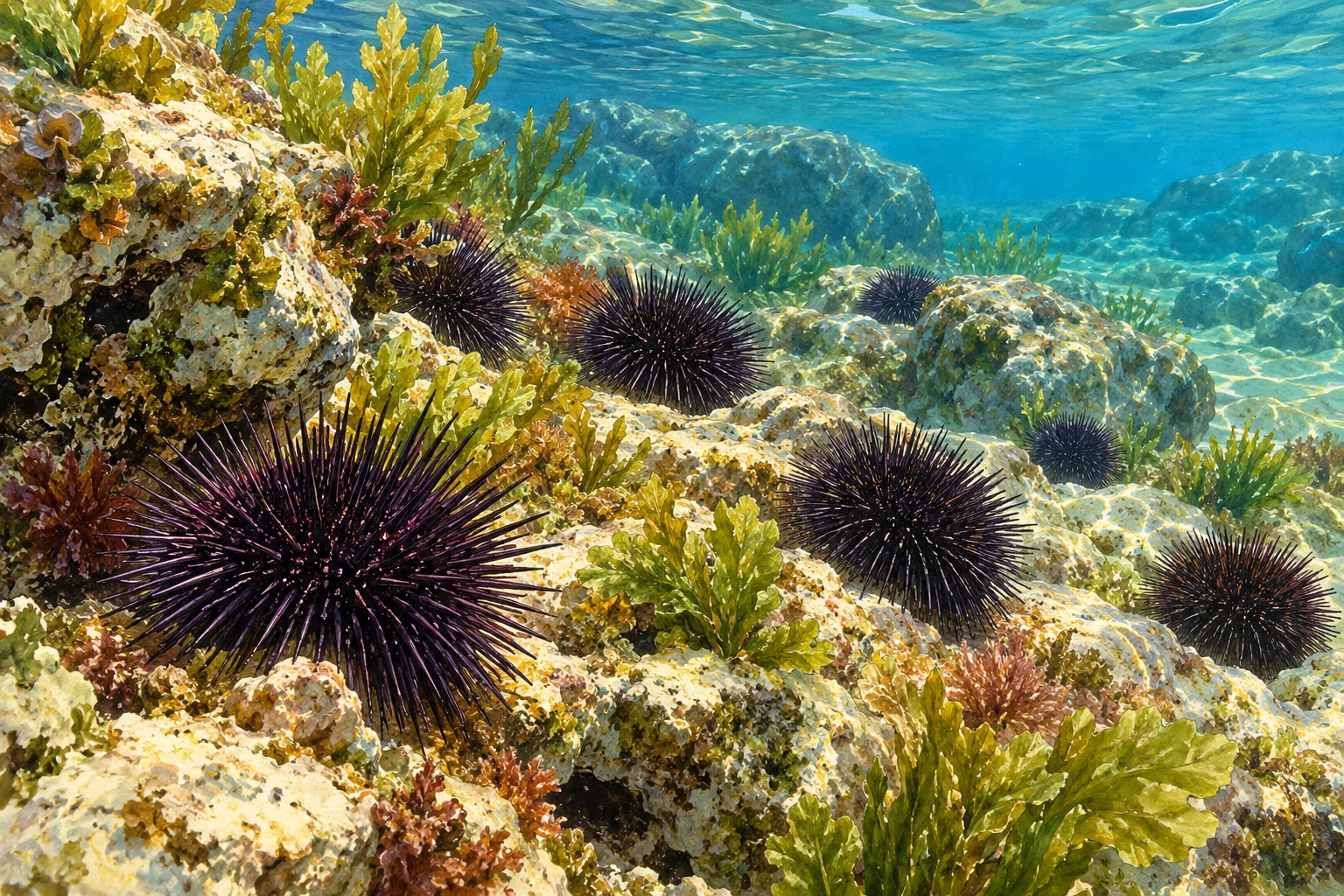
The University of Pula is launching SEAULAB: over three years, a team will study sea urchins, their reproduction and responses to stressors. The project launch is research news – not a new finding about bathing water quality.
The spines are only the visible part
For swimmers, a sea urchin is often first and foremost something they do not want to step on. For researchers, the same animal can provide a link between habitat, development and the effects of pollutants. That is the perspective behind the new SEAULAB project at Juraj Dobrila University of Pula.
The university gives the project dates as 1 October 2026 to 30 September 2029. Supported by the Croatian Science Foundation, the project is led by Petra Burić. The announcement describes planned investigations, not a completed assessment of the marine environment near Medulin.
From the field to the laboratory
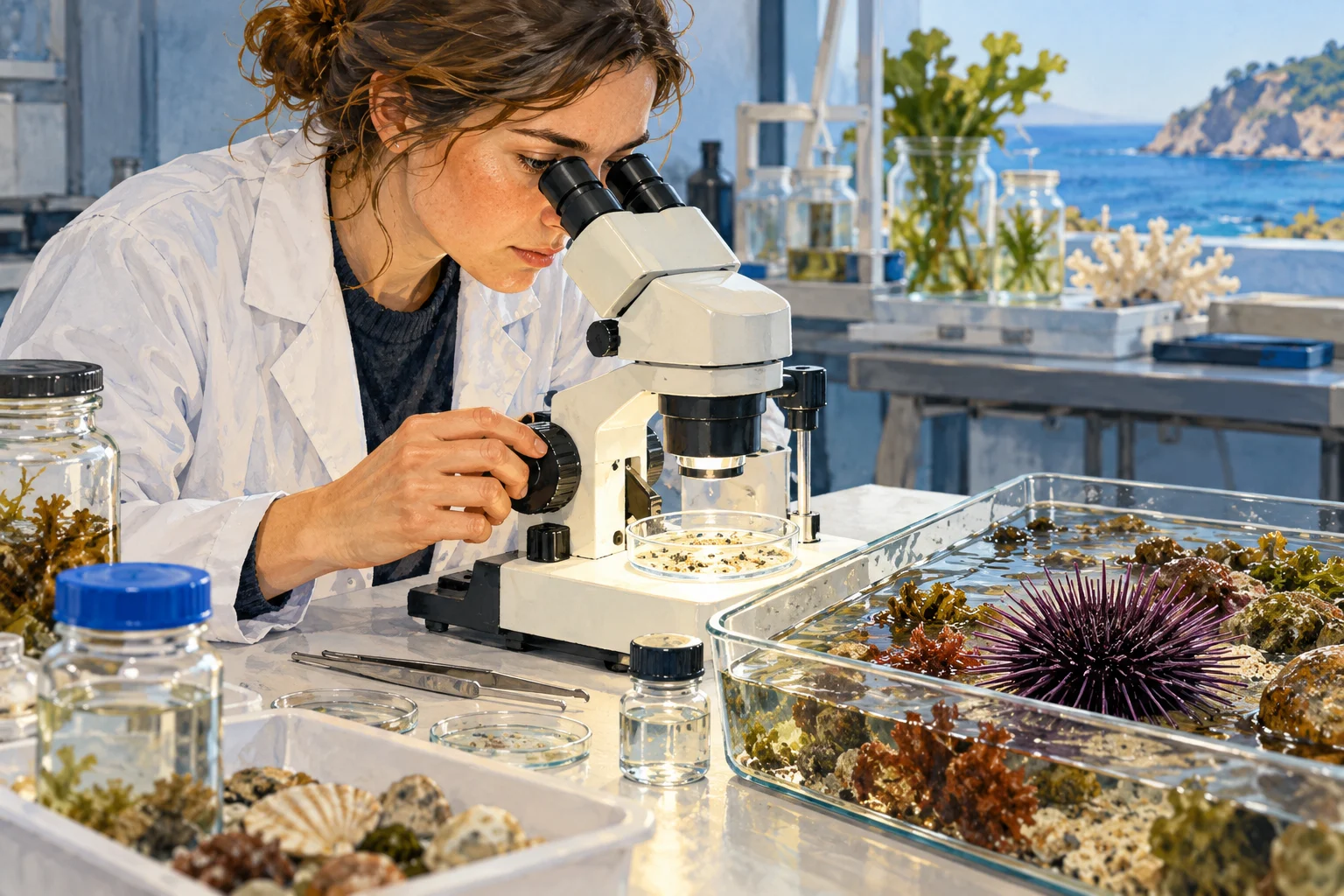
Recurring fieldwork is planned at several sites in the Medulin area. Among other things, the team intends to examine physical characteristics and reproduction. Later work will focus on early developmental stages and responses to stressors. The university names microplastics, cigarette waste and fuel residues as areas of investigation.
This combination is scientifically interesting: observations in natural habitats and controlled experiments answer different questions. In the field, many influences act simultaneously. In the laboratory, individual conditions can be compared more precisely. Only analysis will show which relationships the collected data actually support.
A research question is not yet evidence of harm
The fact that a substance is being studied does not mean a dangerous concentration has already been found at every study site. Nor does the presence of sea urchins alone prove that water is free of contamination in every respect. Such claims require specific measurements, methods and benchmarks.
This is particularly important for headlines about a “clean sea”. A project on animal development does not replace an official microbiological bathing water sample. To find out the latest assessment of a particular beach, consult the official bathing water map and its sampling date. A laboratory question and a current swimming recommendation should not be confused.
Use and conservation also need reliable data
The announced programme also includes investigating gonad characteristics and nutritional value. This research direction is not an invitation to collect or taste sea urchins. The announcement offers no new tourist collecting course and grants no permission to remove animals.
For visitors, a straightforward approach remains sensible: observe, keep your distance and leave animals in their habitat. Future reporting will focus on the actual results – which samples were examined, how much sites differed and where the conclusions reach their limits. Until then, the important step is that the questions are being investigated systematically.
Evidence
Sources & date
Sources support the facts. Planning notes and recommendations are Golden Beach editorial assessments.
Time-sensitive information may change. Please check the linked primary source before travelling.

