

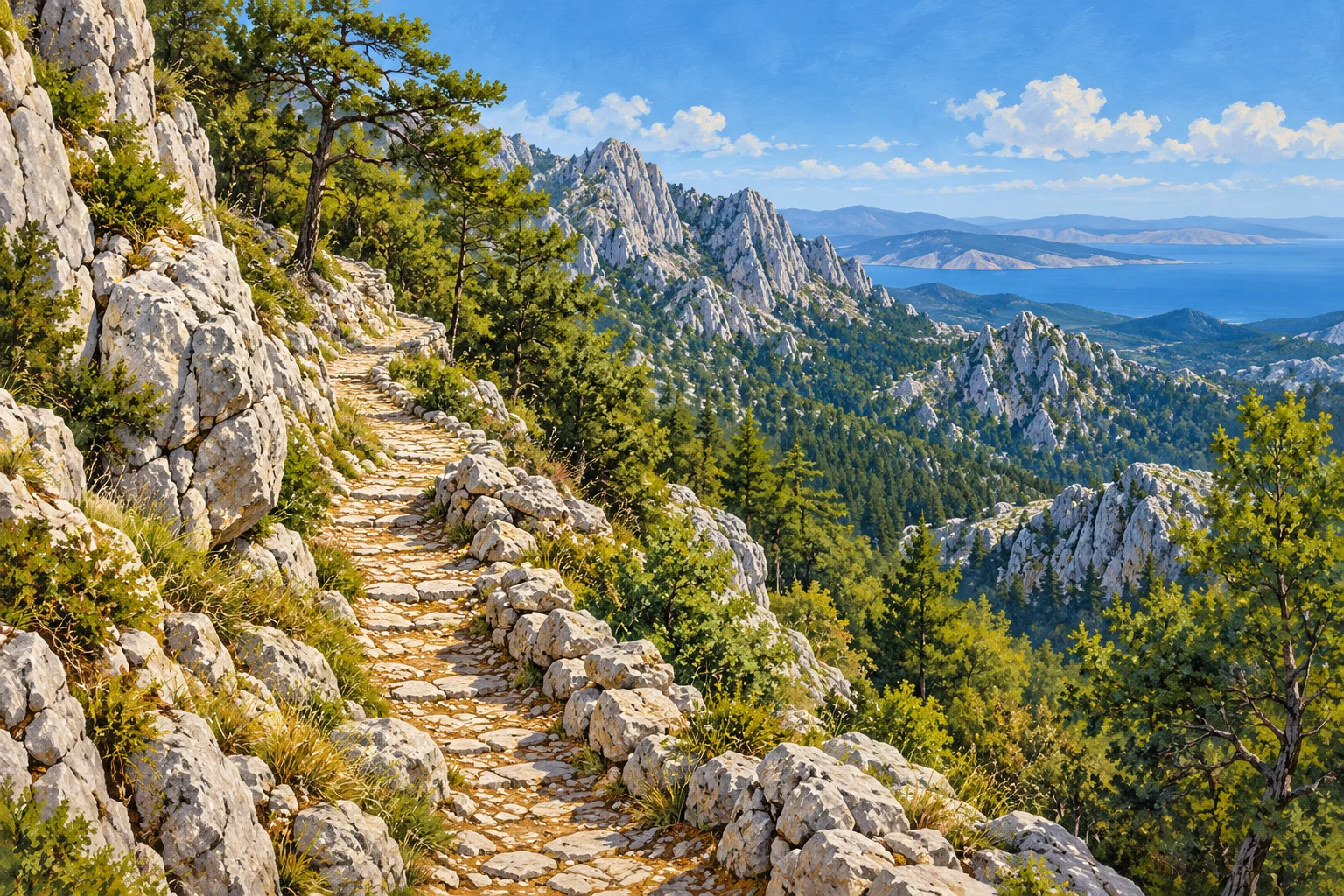
A narrow stone path winds through Velebit’s rugged karst. What makes it special is not just the panorama, but a building craft that crosses the terrain without turning it into a wide road.
Here, the path is an attraction in its own right
In Velebit, it is easy to keep your eyes on the peaks. On the Premužić Trail, it is worth looking down too: at laid stones, supporting edges and a line threading its way through difficult ground. The structure is not simply a means to an end, but part of the landscape’s history.
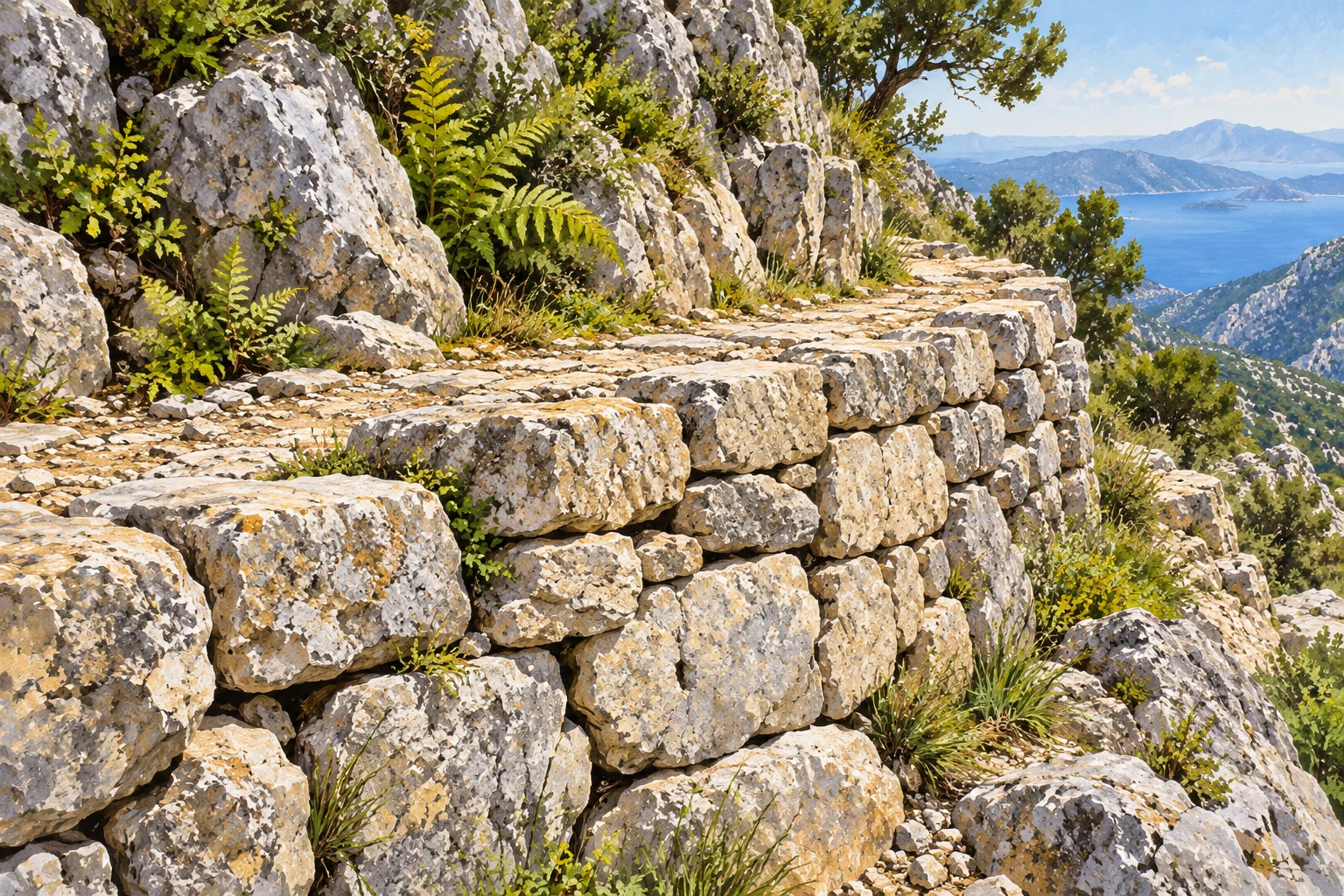
The national park authority describes Premužićeva staza as a masterpiece of dry stone construction. Rather than forcing major changes in elevation along the shortest route, the trail follows the terrain. Its appeal lies precisely in this relationship between careful planning and an apparently effortless fit.
Through the karst in three years
Construction began in 1930 and was completed in summer 1933. The trail is named after forestry engineer Ante Premužić. The park’s account also recalls an interruption caused by a lack of funds and particularly difficult sections. Since 2009, the trail has been protected as a cultural asset of national significance.
Dry stonework means fitting stones together without mortar. For a walker, this is more than a building style: every supporting edge reflects choices about materials, weight and skilled craftsmanship. The narrow trail thus demonstrates a different approach to construction from a tourist road that widens the mountain passage for vehicles.
Why the distance deserves a closer look
The official account uses different reference points: it describes the historical connection from Oltari to Baške Oštarije and the present-day route from Zavižan. This explains the different total lengths in circulation. For the section within the national park, the authority clearly specifies 16 kilometres.
For your own walk, a large total distance is less useful than a specific starting and turning point anyway. If walking only part of the trail, you need to know how you will get back. An impressive photograph along the route does not tell you whether a vehicle transfer has been arranged at the other end or whether you would have to retrace the same distance.
Fewer steep climbs do not automatically make an easy day
The relatively even route makes walking easier, but does not remove the demands of a mountain hike. Distance, daylight, wet conditions, fog and wind remain part of the decision. A wider or well-built path does not automatically protect you from a change in the weather.
Especially in autumn, a landscape portrait should not be read as current clearance for an impromptu traverse. Check access, possible restrictions and suitable route information with the national park authority. Plan sturdy footwear, appropriate weather protection, water, navigation and a return route that still works at a slower pace.
Use the trail, do not rebuild it
Dry stone walls are not a supply of souvenir stones. Climbing on them, moving stones or making shortcuts interferes with the structure. A respectful visit stays on the designated path and leaves vegetation and stonework unchanged.
Perhaps this is the place’s most lasting lesson: access to nature need not mean bringing it entirely under control. The Premužić Trail offers a carefully constructed passage. How far to walk on a particular day still depends on real conditions – not the beauty of a photograph or the length of a wish-list route.
Evidence
Sources & date
Sources support the facts. Planning notes and recommendations are Golden Beach editorial assessments.
- Premužićeva staza – history, route and key figuresSjeverni Velebit National Park · Checked 20 October 2026Construction history, dry stonework, protected status, different endpoints and 16 km within the park
- Sjeverni Velebit National ParkParkovi Hrvatske · Checked 20 October 2026Park context and visitor information


