

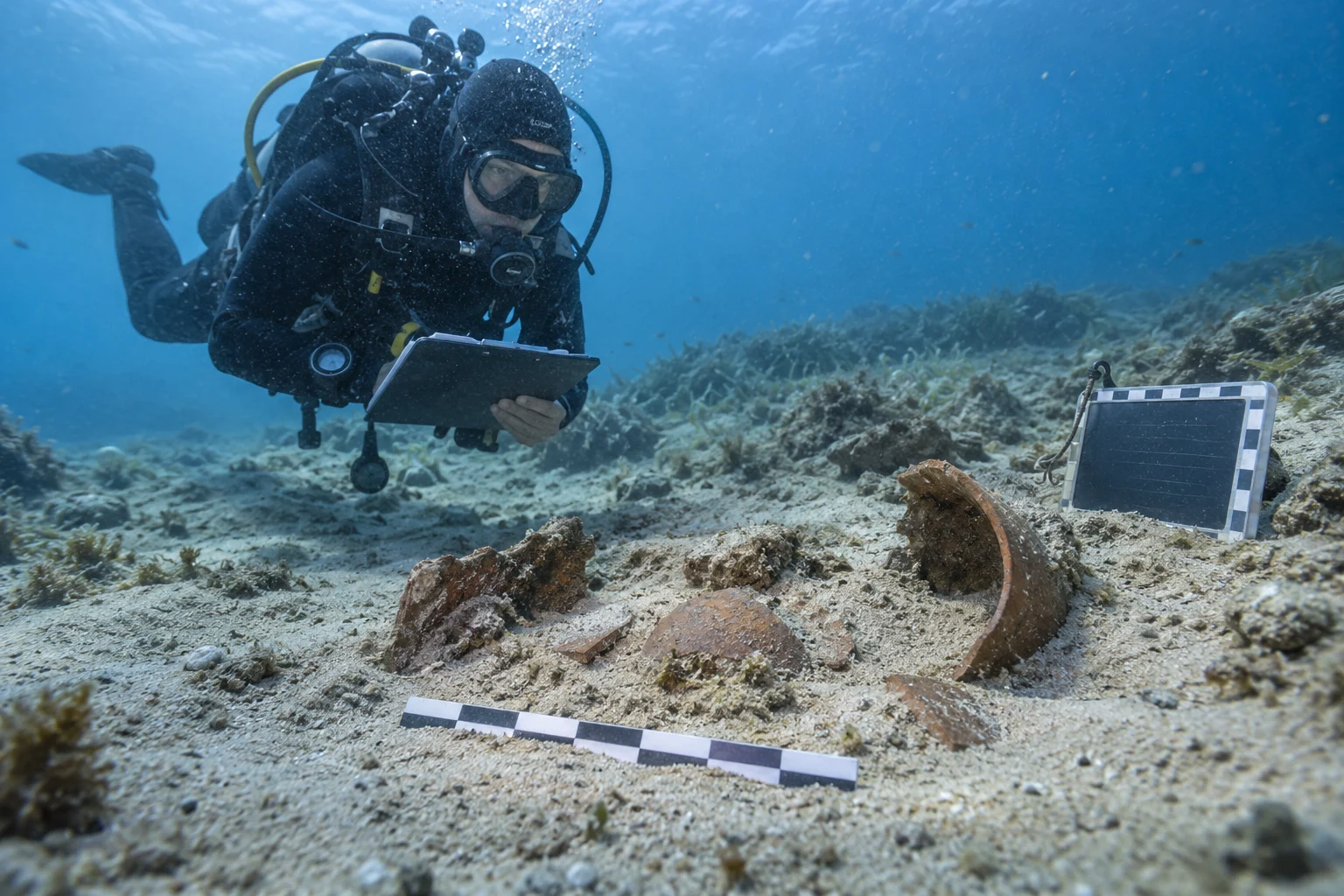
An HRT report presents a new ceramic find from the already known Roman wreck near Cape Letavica. The vessel is dated to the first century BC. Its recovery is not an invitation to private treasure hunting.
A new find at a known site
On 8 October, HRT reports on a ceramic wine vessel from the Roman wreck near Cape Letavica on Pag. The report dates it to the first century BC, making it approximately 2,100 years old. According to the report, the wreck itself was discovered by Vedran Dorušić back in 2018. The news therefore concerns the vessel, not the discovery of a previously unknown ship.
The public-service broadcaster spoke to people involved in the work and archaeologist Irena Radić Rossi from the University of Zadar. This gives the news a traceable origin. However, this article is not based on a fully published study of the specific vessel with an inventory number, analyses and a site plan.
What cannot yet be said about it
An object can change how we imagine life on board. The published report cannot reliably tell us whether this vessel belonged to a particular person, on what occasion people drank from it or what it last contained. Such stories would be vivid, but invented.
It also lacks a confirmed public exhibition date. Anyone wanting to see the find should therefore await a later announcement by the research institution involved or a museum. News of a recovery is not yet a new tourist attraction with a bookable visit.
Underwater finds need protection
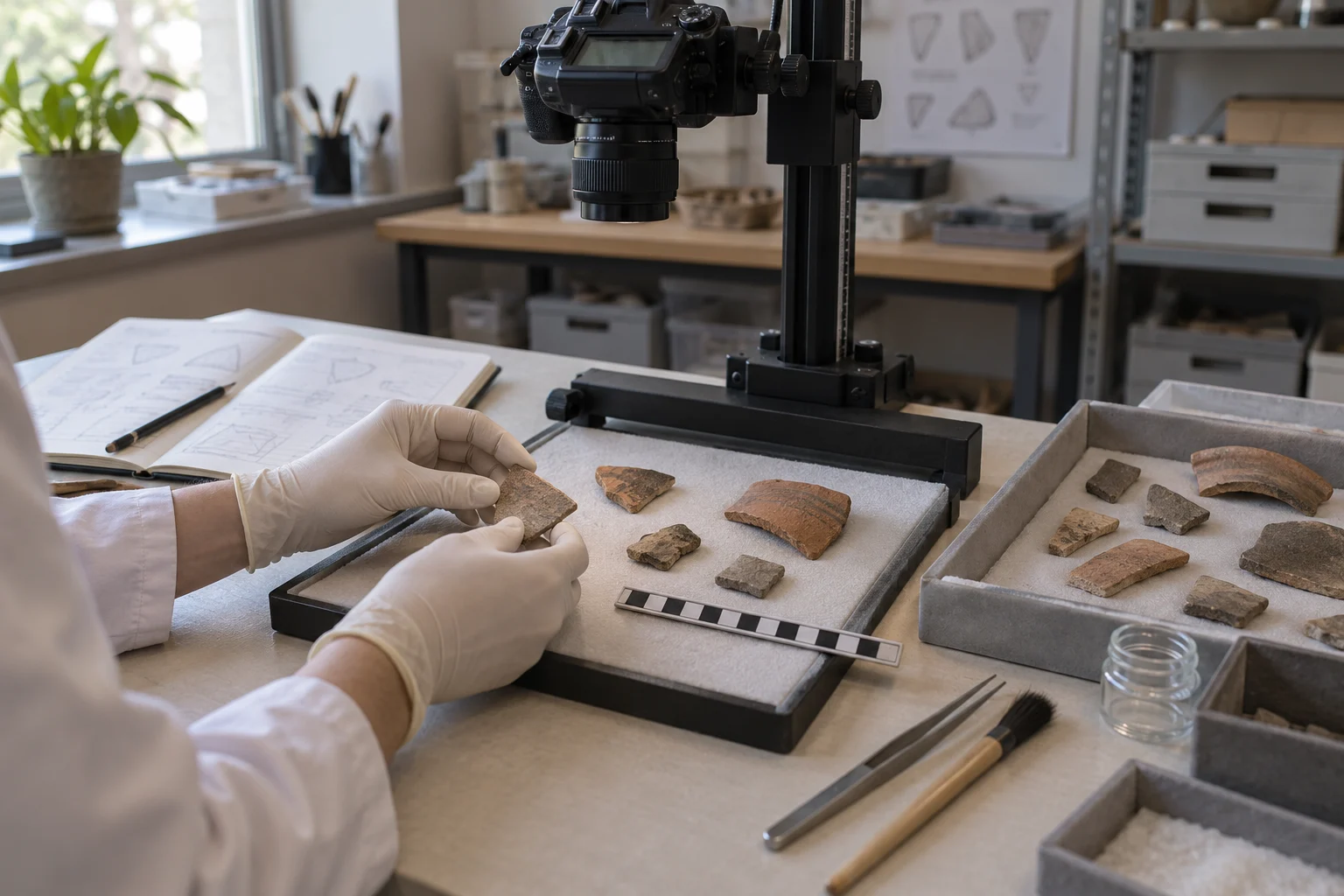
Croatia's Act on the Protection and Preservation of Cultural Property requires a permit for archaeological investigations. It also prohibits targeted searches for archaeological sites and individual objects using metal detectors, side-scan sonar or similar equipment without the appropriate permission. Underwater sites are explicitly included.
Our recommendation for chance observations is simple: do not remove or alter anything, do not publicise the exact find location, and inform the competent heritage authority or a museum. For reports of unauthorised interventions, the state portal identifies the cultural property inspectorate as the point of contact. This allows a discovery to become a potential contribution to research rather than a souvenir removed from its context.
Faktagrunnlag
Kilder og dato
Kildene underbygger fakta. Planleggingsråd og anbefalinger er Golden Beachs redaksjonelle vurderinger.
- Senzacionalno otkriće u podmorju PagaHRT / Ante Kolanović, Dnevnik · 8 October 2026, 19:50; checked on 11 OctoberOn-site report and direct statements by participants; ceramic find, dating and wreck discovery in 2018; not a complete publication of the find
- Zakon o zaštiti i očuvanju kulturnih dobara · NN 145/2024Narodne novine / state document catalogue · 2024; checked on 11 October 2026Permit requirement for archaeological investigations and prohibition of unauthorised technical searches for finds, including underwater
- Inspekcija zaštite kulturne baštinegov.hr · Checked on 11 October 2026Point of contact for reports of unauthorised interventions affecting cultural property


