

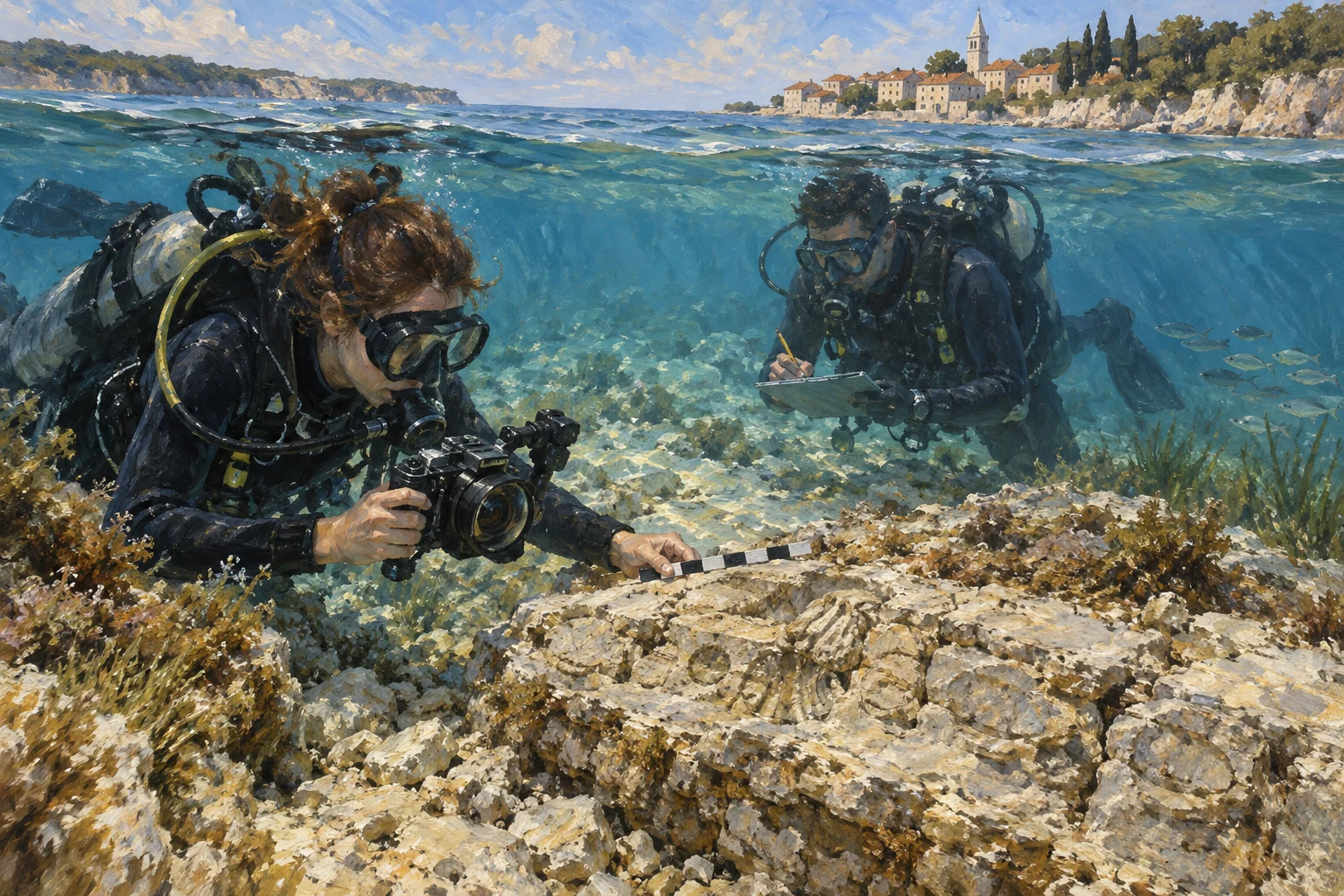
An international team is studying new finds in the Datule–Barbariga reserve. The bones are thought to be around 130 million years old. The site itself has been known for decades and is not an unrestricted fossil-collecting spot.
New bones from a known site
An international research team is working on dinosaur bones in the sea off Bale. HRT showed the work on 13 October and reported finds including vertebrae and ribs. Palaeontologist Matthew Lamanna, who is involved in the research, identifies the animal under study as a new species.
This is an expert assessment from ongoing research. The report does not yet present a formal scientific description with a new species name. The news can therefore be reported precisely without claiming an established family tree or a complete picture of the animal’s appearance.
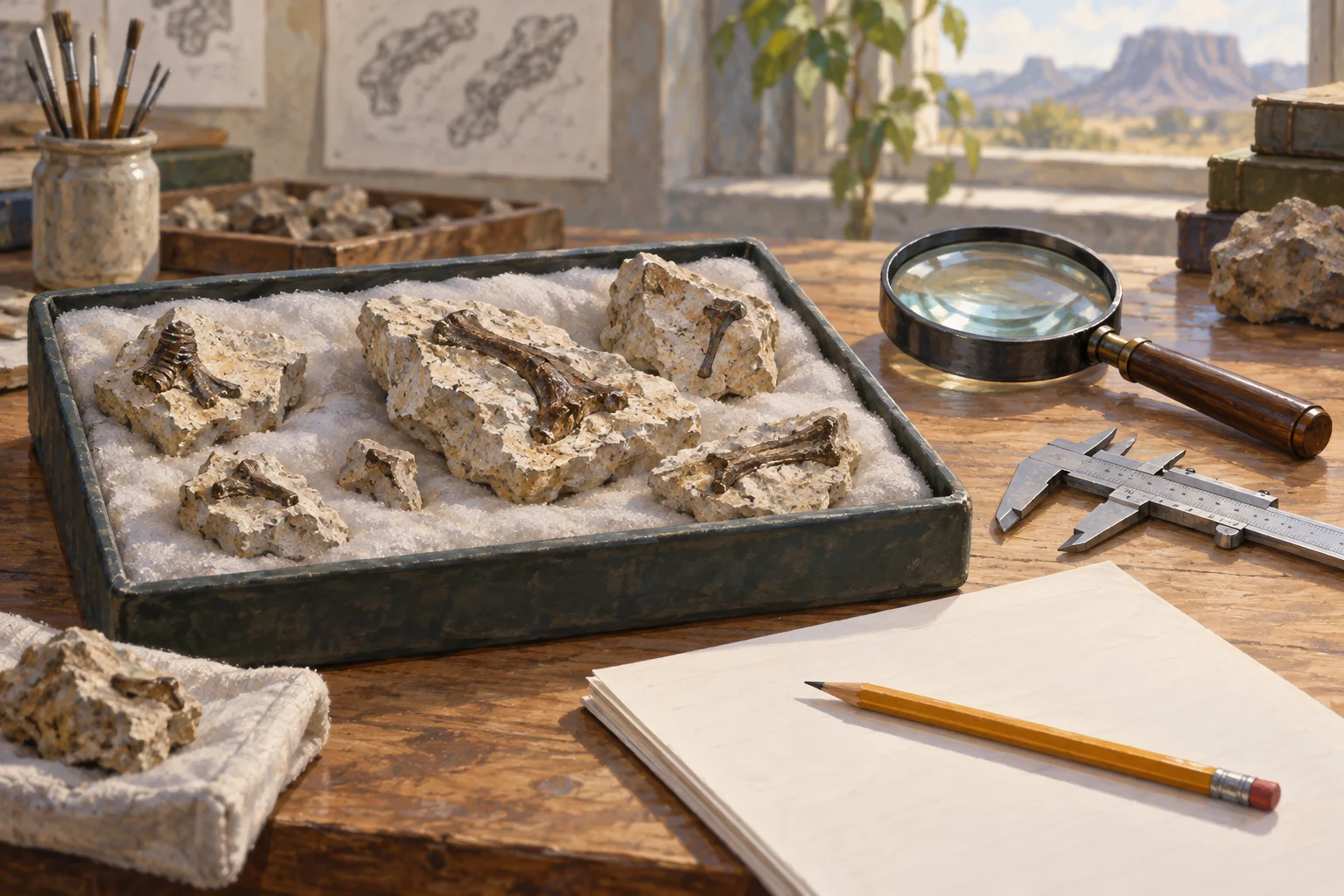
The reserve has not only just been discovered
The first dinosaur bones were found here back in 1993. Natura Histrica dates the decision to protect Datule–Barbariga to 1994 and gives its area as 425.65 hectares. The fossil-bearing layers belong to the Lower Cretaceous; the managing authority places them roughly between 130 and 120 million years ago.
What is new, then, is the current excavation and its potential scientific findings. The long-established and still important insight is that this coast preserves an exceptional archive of Earth’s history. A new find does not make the entire site a new discovery.
A research area, not a private diving adventure
Natura Histrica lists bans on fishing, anchoring, underwater activities and the removal of natural materials in the protected area. Authorised scientific work is a separate matter. The publicly explained protection rules are not an invitation to uncover bones yourself or take away apparently loose finds.
Anyone interested in the discoveries can follow the findings without visiting the site. Even an unremarkable stone may have scientific value; research depends not only on the individual object but also on its relationship to the surrounding layers. A souvenir prised out of the rock cannot replace that context.
What would make the next news significant
A published scientific description would be especially revealing: which features distinguish the animal from known forms, which parts survive, and how certain is the identification? Until then, the participating researcher’s statement should remain clearly identified as such.
That does not diminish the find. It shows why more work lies between an exciting excavation report and a robust description of a new species. Istria’s history begins long before its old towns—and part of it is being studied underwater today.
Evidence
Sources & date
Sources support the facts. Planning notes and recommendations are Golden Beach editorial assessments.
- World discovery in Istria – bones of a previously unknown dinosaur species found in the seaHRT, Marko Percan · 13 October 2026, 20:18Original report with participating researchers, current finds and assessment of a new species; not a taxonomic scientific publication
- Datule–Barbariga special palaeontological reserveNatura Histrica · Protection decision in 1994; checked 14/15 October 2026History, area, geological context and protection rules of the reserve; archived by direct retrieval


