

After an operation on 26 September, HGSS criticised a gap in technical air rescue. The Interior Ministry points to ongoing certification and training. Air transport, a medical flight and lifting by cable are different tasks.
One operation exposes a technical gap
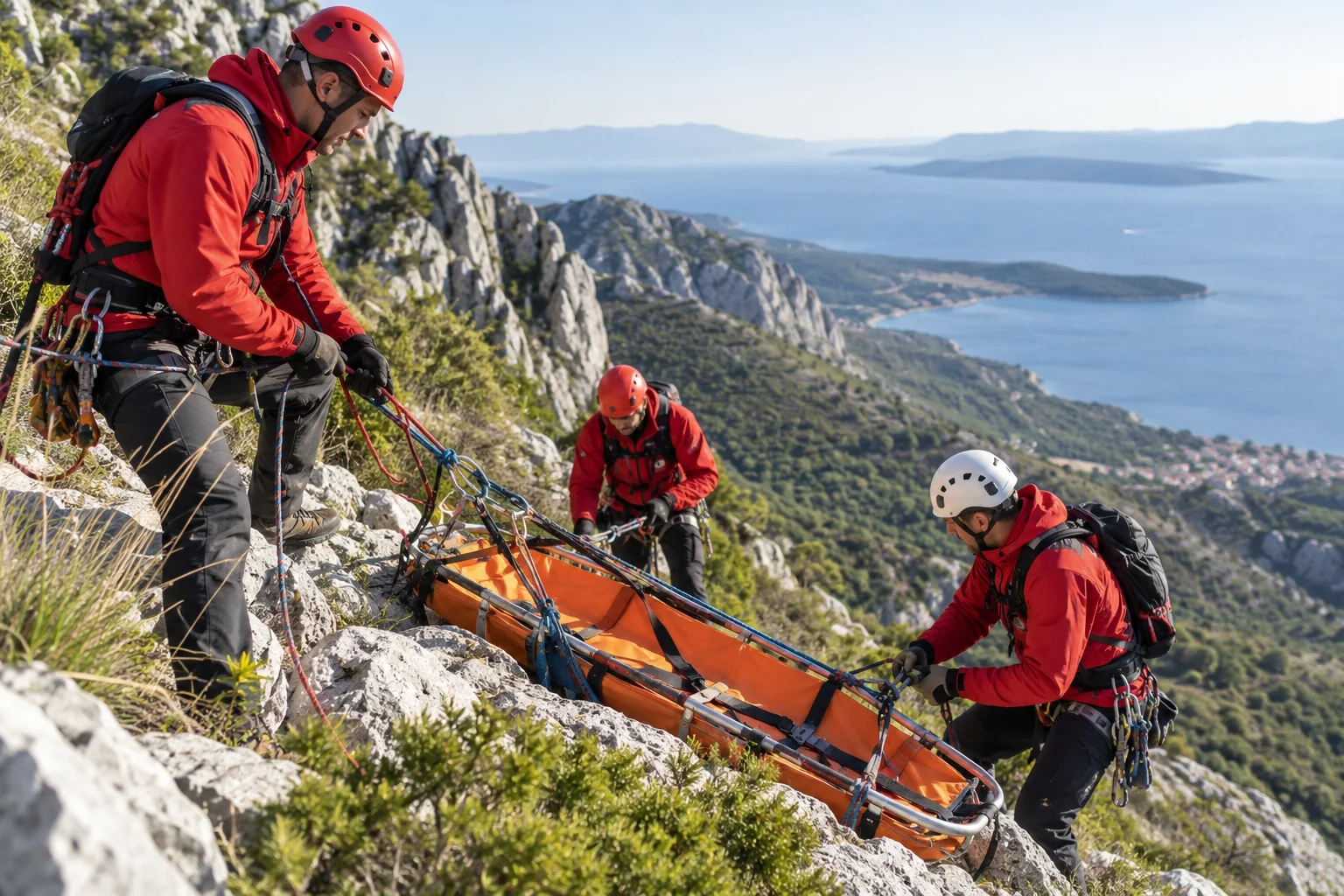
On 26 September 2026, a person with serious heart-related symptoms had to be rescued from difficult terrain on Tulove grede. According to HGSS, its Zadar station received the alert at 2:25 pm. Some help was already at the scene and further personnel joined.
The operational description is not a medical diagnosis, so we refer to the reported symptoms rather than an independently confirmed heart attack. The route out of the terrain is crucial to the later debate: the person first had to be carried over land to an accessible handover point.
More than one hundred metres on rope—then the flight
HGSS reports a descent of more than one hundred metres on rope followed by transport through demanding terrain. Twelve rescuers were involved. At 6:09 pm, the person was handed over to a HEMS medical helicopter crew and flown to KBC Rijeka.
This confirms that air transport took place. It also shows why “a helicopter was available” does not answer the decisive question: could the crew collect the person directly from the difficult location, or did mountain rescue first have to reach a handover point?
Three tasks that should not be confused
A helicopter can move personnel or equipment. A medical helicopter can collect a patient at a suitable point and fly them quickly to hospital. A technical extraction by rescue winch imposes additional requirements on equipment, certification, crew and joint procedures.
That distinction explains the dispute better than saying Croatia has no air rescue at all. HGSS criticised the fact that the new helicopters were not yet ready for the required winch rescue and called for coordinated procedures, infrastructure and training as well as equipment.

What the Interior Ministry says
In a report published on 28 September by Dnevnik.hr and Dnevnik Nove TV, the ministry said police helicopters were airworthy and operational and had already been used in twelve day or night operations. Two winches were undergoing testing or certification in the United States.
The ministry also cited crew selection and training for search and rescue. That does not automatically contradict every HGSS criticism: an airworthy aircraft and an approved, practised winch-rescue system are not the same status. The information reviewed gives no firm date for full operation.
The question that remains open
Further reporting needs a concrete confirmation: from what date will which technical rescue capability actually be available, and with which crew? Delivery, a successful test and a regular readiness service are separate milestones.
It would also be wrong to generalise from one operation to every Croatian aircraft or region. The criticism concerns one named capability and the situation at the end of September. It proves neither the end of air rescue nor a guarantee of winch extraction at every location in future.
What this means for a day in the mountains
The possibility of rescue is not part of personal route planning. Choose terrain and length suitable for the group, check the weather and allow time reserves. In an emergency, make an early, clear 112 call: describe the location, access and observed situation, then follow instructions.
This article documents an operation and subsequent statements. It replaces neither medical advice nor the rescue dispatcher's decision. Possible and appropriate help depends on the emergency, terrain, weather and available teams.
Gjendja e fakteve
Burimet dhe data
Burimet mbështesin faktet. Këshillat e planifikimit dhe rekomandimet janë vlerësime redaksionale të Golden Beach.
- Rescue on Tulove gredeCroatian Mountain Rescue Service · 27 September 2026Operation on 26 September and criticism of missing winch readiness
- Police helicopters await winches – Interior Ministry statementDnevnik.hr / Dnevnik Nove TV · 28 September 2026Ministry information obtained by the broadcaster on operations, certification and training


