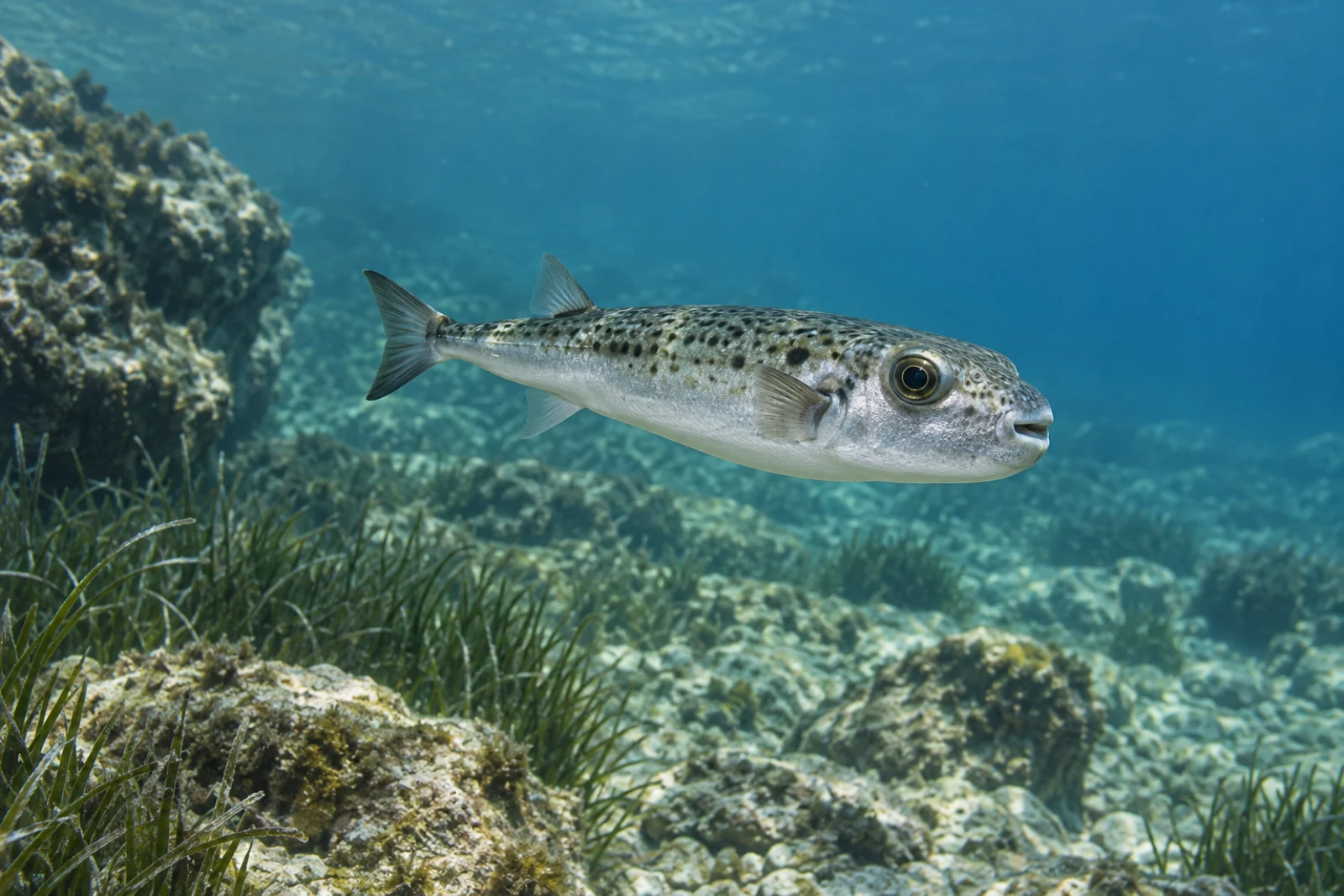
From 31 July to 16 August, research teams systematically searched the Adriatic for whales, dolphins and sea turtles. New population figures are not yet available—the method explains why analysis takes time.
The flights are over, but the answer is not ready
Between 31 July and 16 August, international research teams surveyed the Adriatic Sea from the air for whales, dolphins and sea turtles. The Croatian component took place under the EU-co-funded Priroda na oku project, with the participation of the Blue World Institute, Blue World Vis and the Croatian Natural History Museum.
The announcement that the flights have ended is not yet a results report. Neither the environment ministry nor the research institute published new overall figures or an increase or decrease for individual species in it.
Why the aircraft does not simply follow animals
The route follows pre-planned lines spaced 15 kilometres apart, according to the Blue World Institute. This covers the sea systematically. Observers do not search only where particularly high numbers of sightings are already expected; they follow a consistent grid.
By 7 August, the institute said, the team had completed 40 flights between Brindisi, Dubrovnik and Lošinj. That interim figure describes progress at that point, not necessarily the final number of all flights completed by 16 August.

A sighting becomes data only when distance is recorded
Observers record more than the species at each sighting. The distance at which the animal appears from the flight line is crucial. The farther away it is, the greater the chance that an animal will be missed. The later analysis must account for precisely this declining probability of detection.
The animals actually observed can therefore be used to estimate densities in the areas flown over and then cautiously extrapolated to larger areas. This is statistical analysis, not merely the addition of every dorsal fin and shell seen.
For dolphins, the Adriatic does not end at a border
The flight programme covers Croatian and Italian waters. Such joint coverage matters because dolphins, whales and turtles do not move according to national jurisdictions. Separate national snapshots could misrepresent migrations or seasonal shifts.
The survey forms part of international cooperation under ACCOBAMS ASI-II. Using the same method throughout the Adriatic is intended to make data comparable across regions and years.
A repeated count gains value as part of a series
Adriatic-wide aerial surveys were previously carried out in 2010, 2013 and 2018. Further surveys followed in the northern Adriatic in 2019 and 2020, and under another programme in 2021. The new round continues this observation series.
Repetition helps researchers avoid judging distribution and abundance from a single season. Even so, a new figure should not later be read in isolation as proof of a long-term development: weather, visibility, where animals were present and statistical uncertainty all belong in the interpretation.
What the data will be used for
According to the ministry, the data are intended to inform conservation planning, maritime spatial planning, national and international reporting, and restoration measures. They can reveal which areas are regularly important and where human use intersects with sensitive habitats.
An aerial count does not replace reporting an injured animal, nor research from boats or coastal stations. It answers a different question: how are large marine vertebrates distributed across a very large area during a particular survey period?
What can responsibly be said today
It is responsible to say that the survey used a standardised method across the Adriatic and that its results are intended to improve conservation decisions. It would not currently be responsible to infer from individual sightings that dolphins or turtles have definitely increased or decreased.
The next robust news value will come with the published analysis. Until then, the most important finding is not a spectacular animal count, but the way many controlled observations are intended to create a comparable picture of the Adriatic.
Evidence
Sources & date
Sources support the facts. Planning notes and recommendations are Golden Beach editorial assessments.
- Aerial survey of cetaceans and sea turtles in the Adriatic Sea conducted under the Priroda na oku projectMinistry of Environmental Protection and Green Transition · 4 September 2026, checked on 4 September 2026period, participating institutions, earlier surveys and intended use of the data
- 8th international aerial survey of the abundance of whales, dolphins and sea turtles in the AdriaticBlue World Institute · August 2026, checked on 4 September 2026flight grid, 15-kilometre spacing, observation method, interim progress and international cooperation